
Works by Nebim's rules
Documents are created through Nebim Integrator, following Nebim's own process flow. Nothing is written directly to database tables.
Web and mobile apps for business processes
Athvora brings together reporting, wholesale and warehouse apps integrated with Nebim V3, plus sports club and residential dues management, on one shared platform. Every app runs on a multi-tenant architecture with user permissions and an activity log.
The technical capabilities behind the apps: from integration to infrastructure, from analysis to release.
The process is examined on site; needs, rules and exceptions are written down.
Screens, permissions and data flow are defined; the impact on the ERP side is clarified up front.
Every feature comes with automated tests and is tried end to end with sample data.
Controlled releases, backups and health checks keep things running.
All three use the company's existing Integrator connection.
Documents are created through Nebim Integrator, following Nebim's own process flow. Nothing is written directly to database tables.
By design, no new licence, data warehouse or additional reporting software is required.
Personal data is read only as far as the job requires; identity and card details are not stored.
 Athvora Reporting
A reporting app that turns the ERP's sales, stock and finance data into ready dashboards. No data warehouse or separate reporting licence; the same screen on phone and desktop, refreshed every 15 minutes.
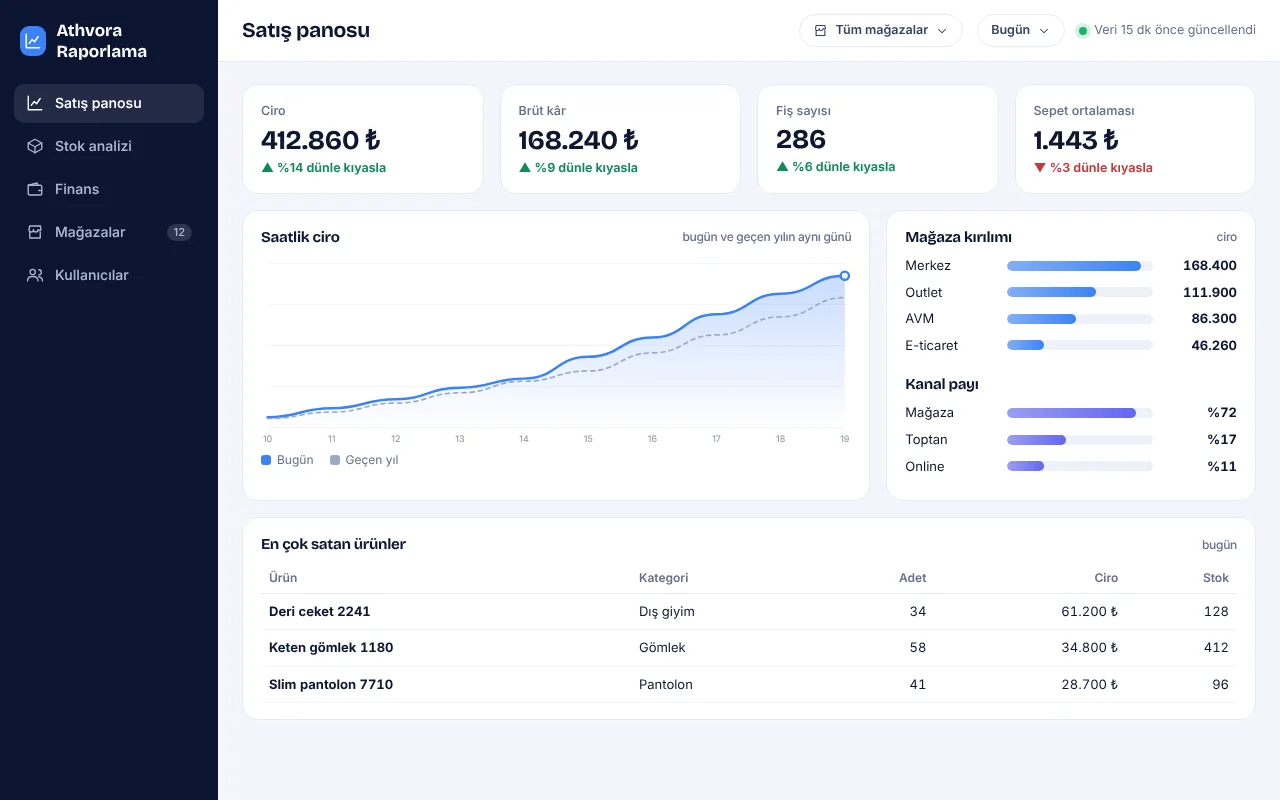
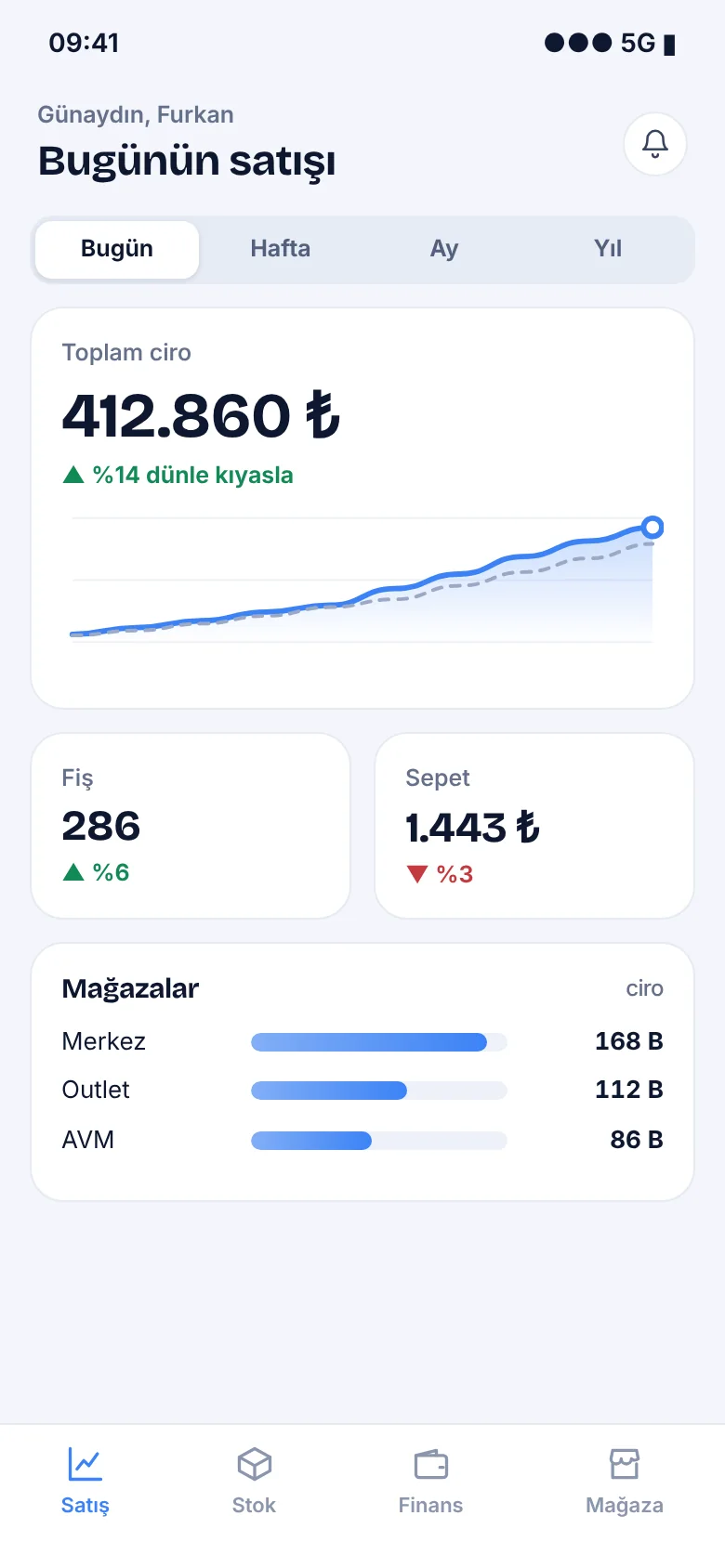
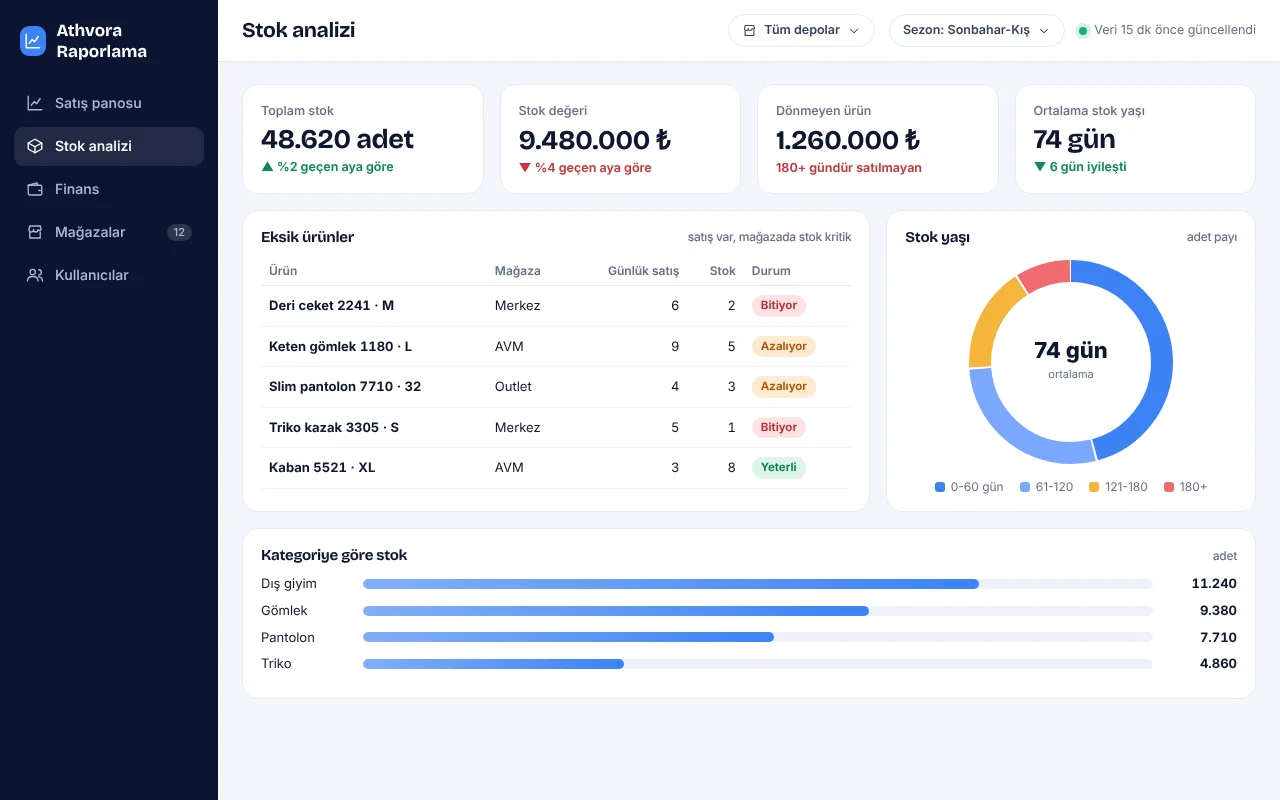
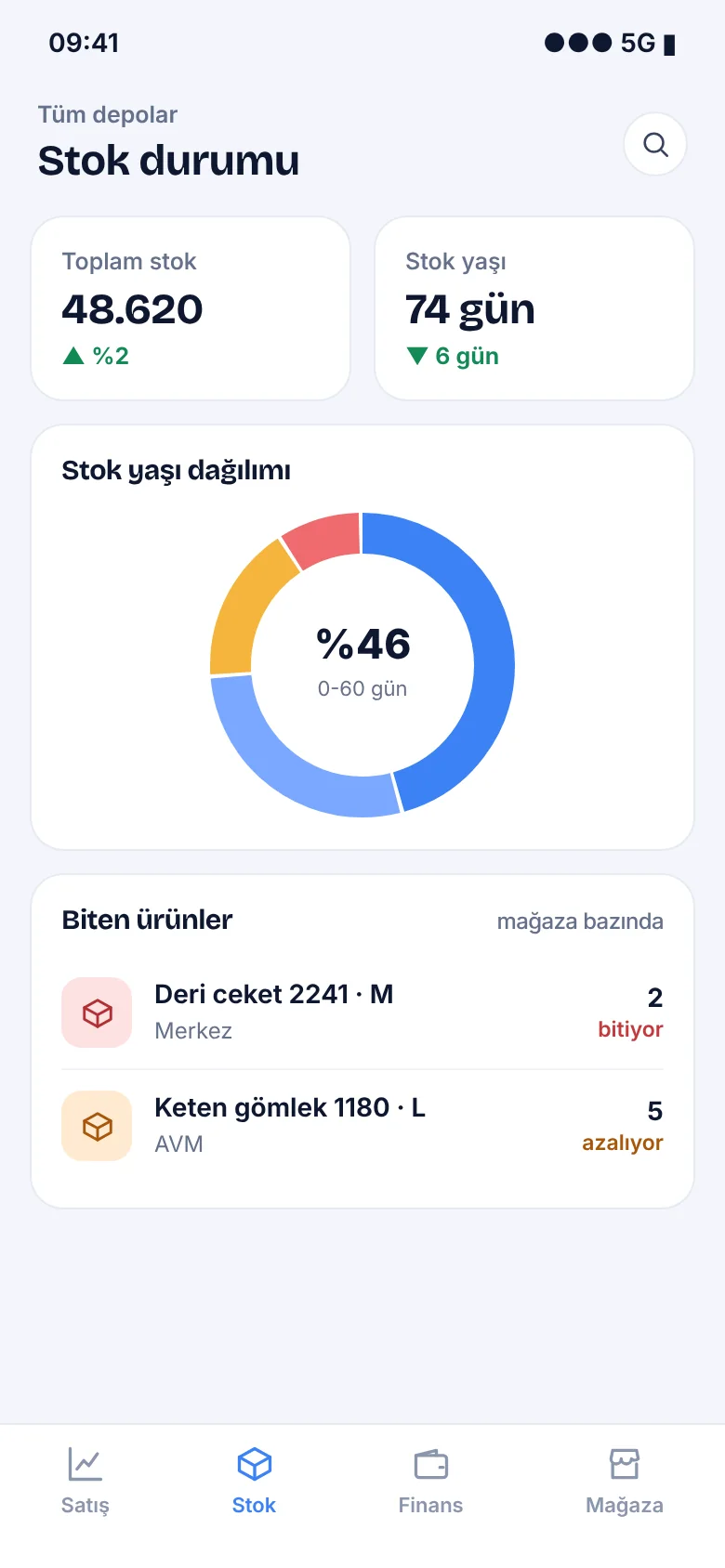
Screens are prepared with sample (demo) data and contain no real company data.
 Athvora Wholesale (B2B)
A wholesale (B2B) app that works with the ERP's price lists, stock and dealer discounts. Ordering, card payment and account statements on one screen; approved orders are written to the ERP.
Each tenant runs under its own name, logo and colours; Google Play and App Store apps are produced from the same code base.
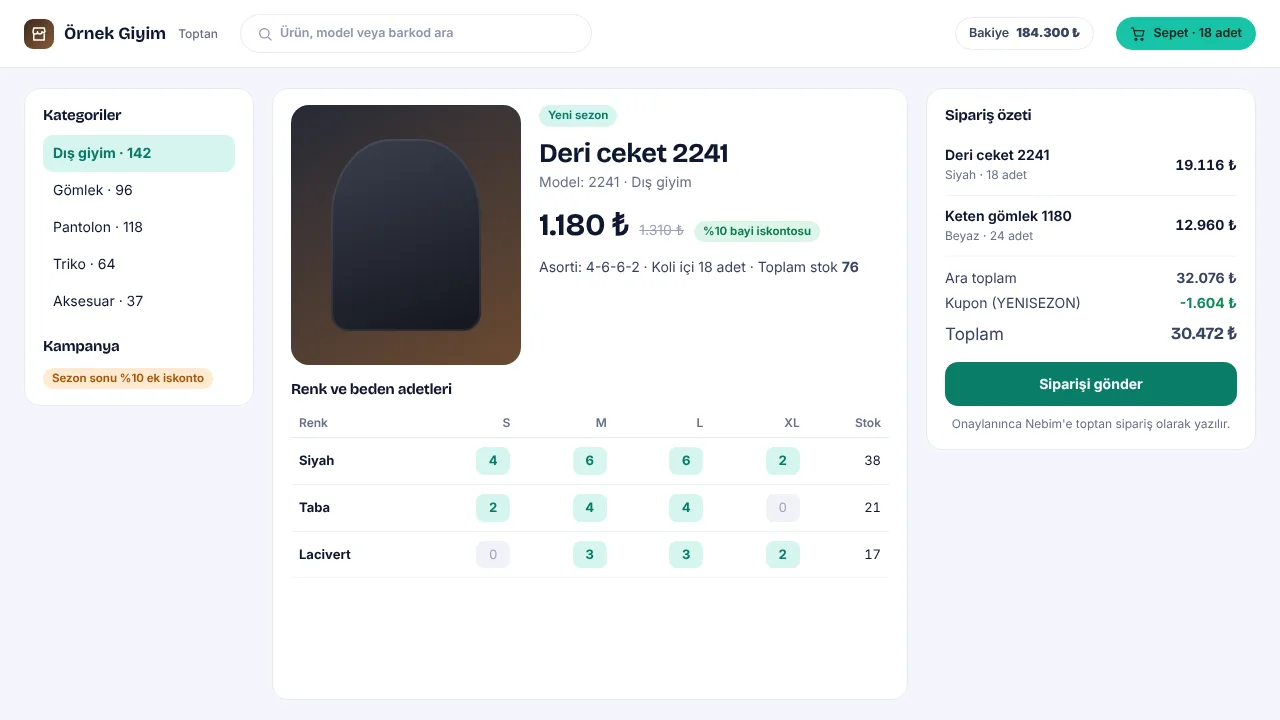
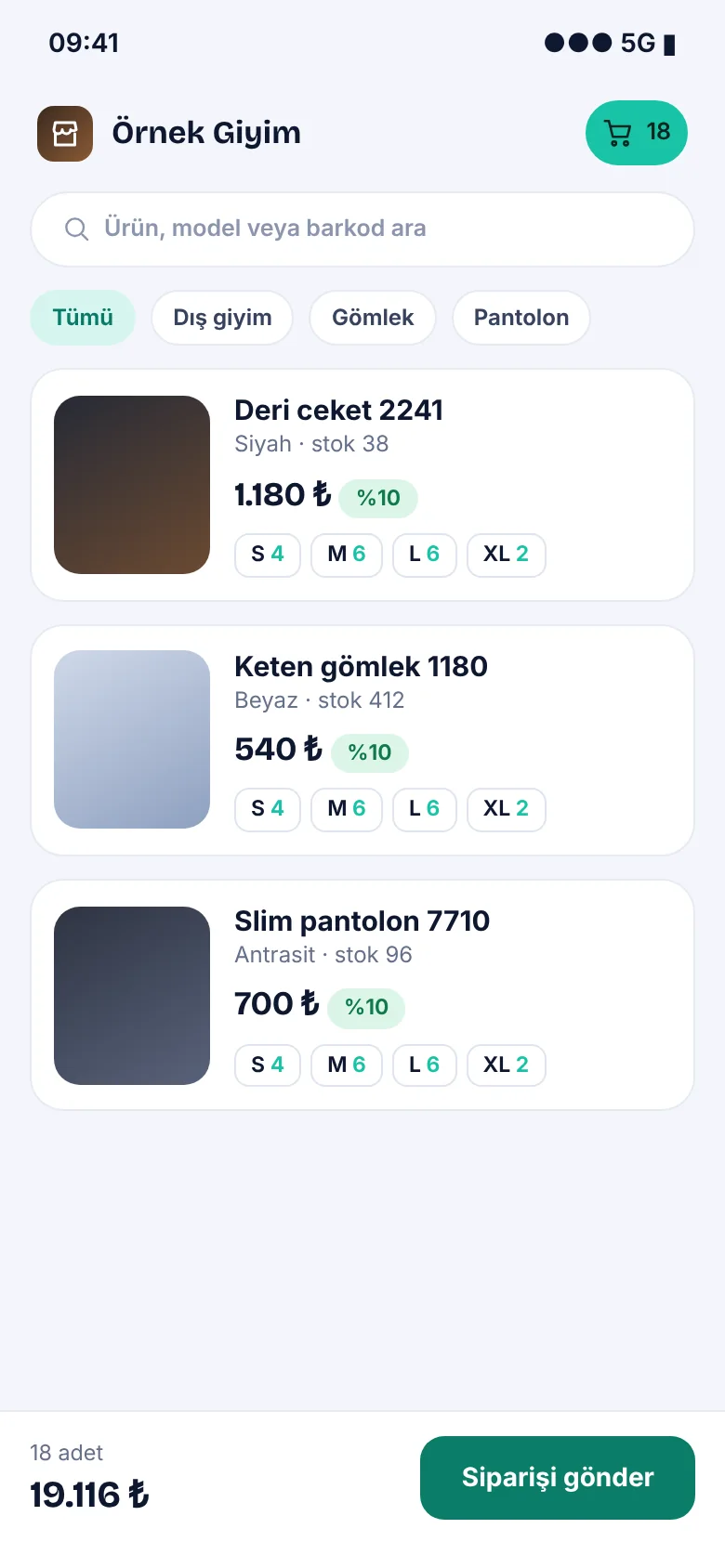
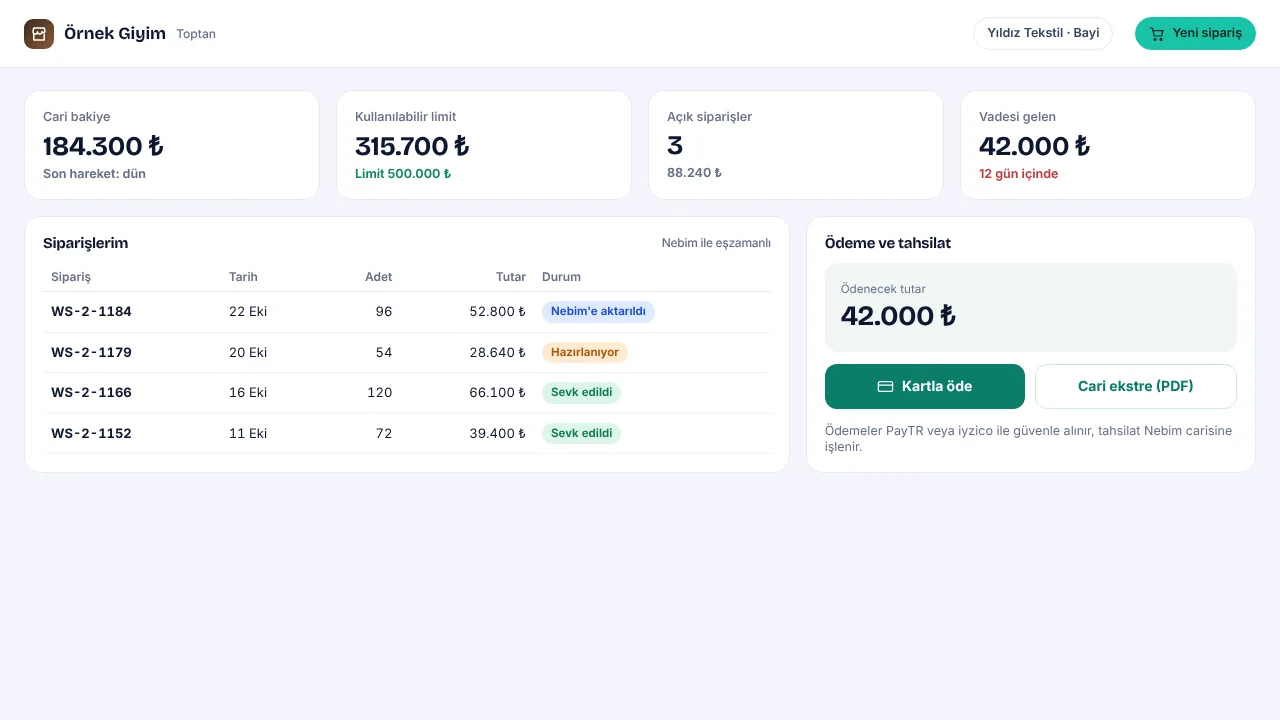
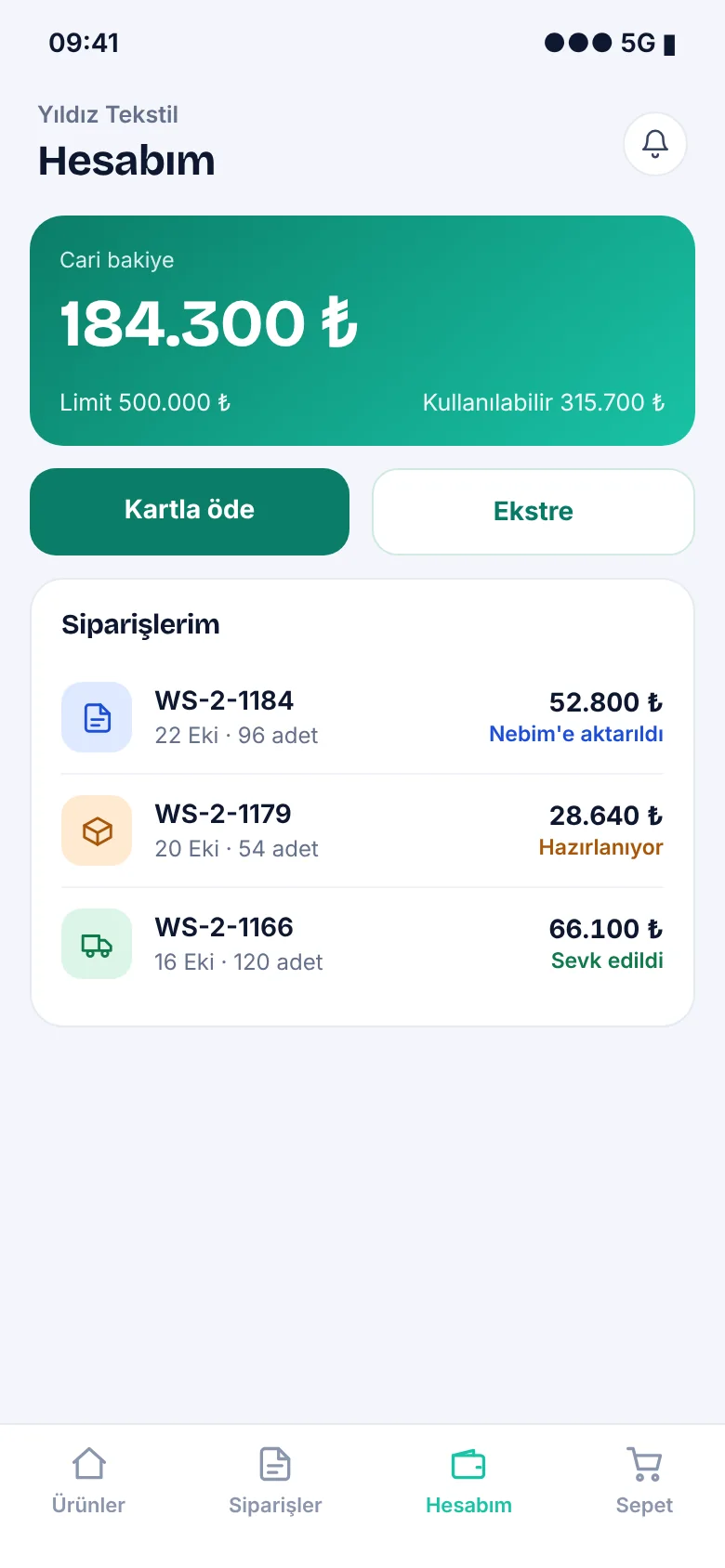
Screens are prepared with sample (demo) data and contain no real company data.
 Athvora Field
A role-based mobile app for warehouse, purchasing, sales and store operations. Scan with a handheld terminal or the phone camera; the document is created in the ERP when the job is completed.
Companies that don't track bins can switch off the WMS section and use only the sales, purchasing, transfer, count and label screens.
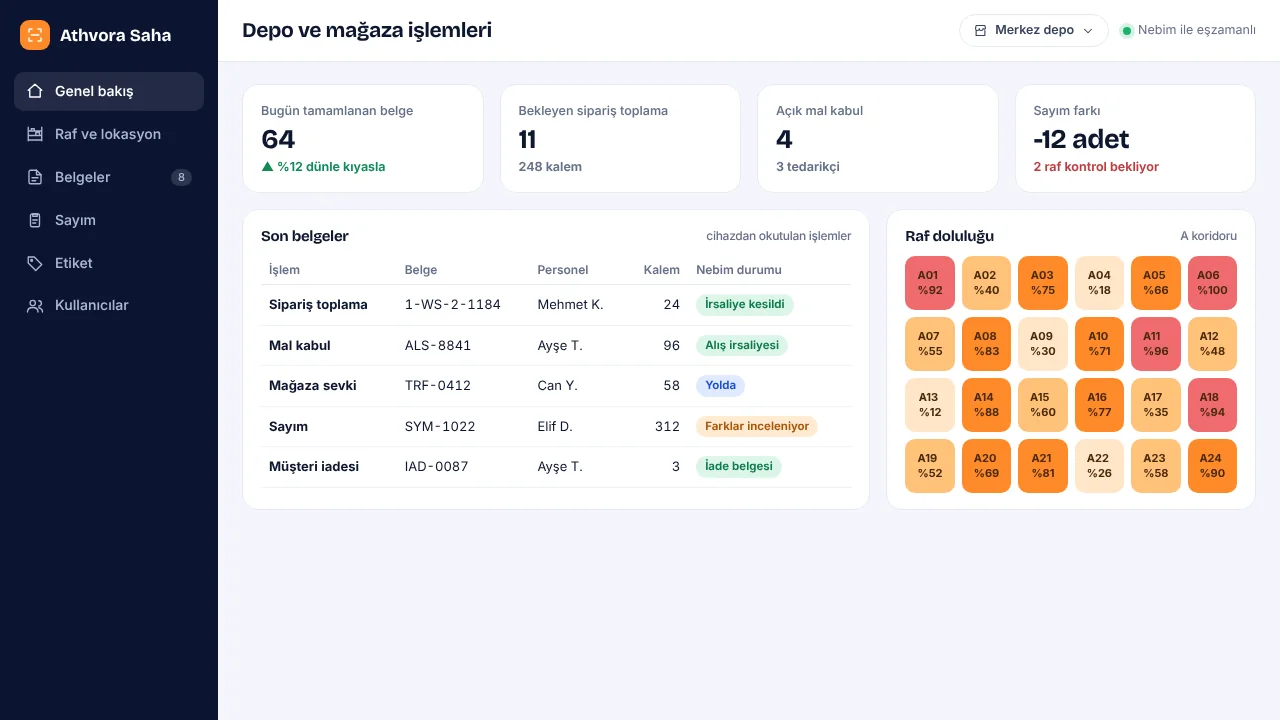
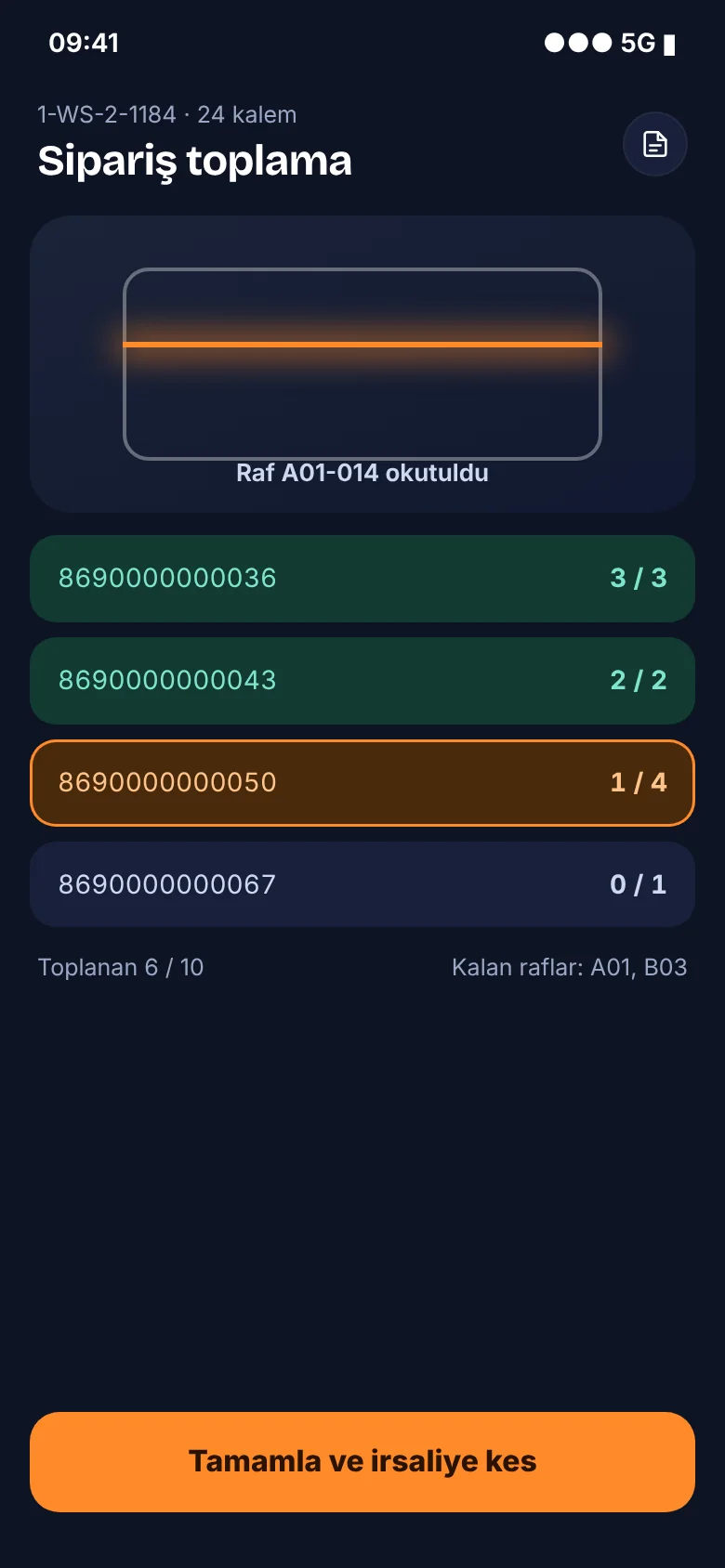
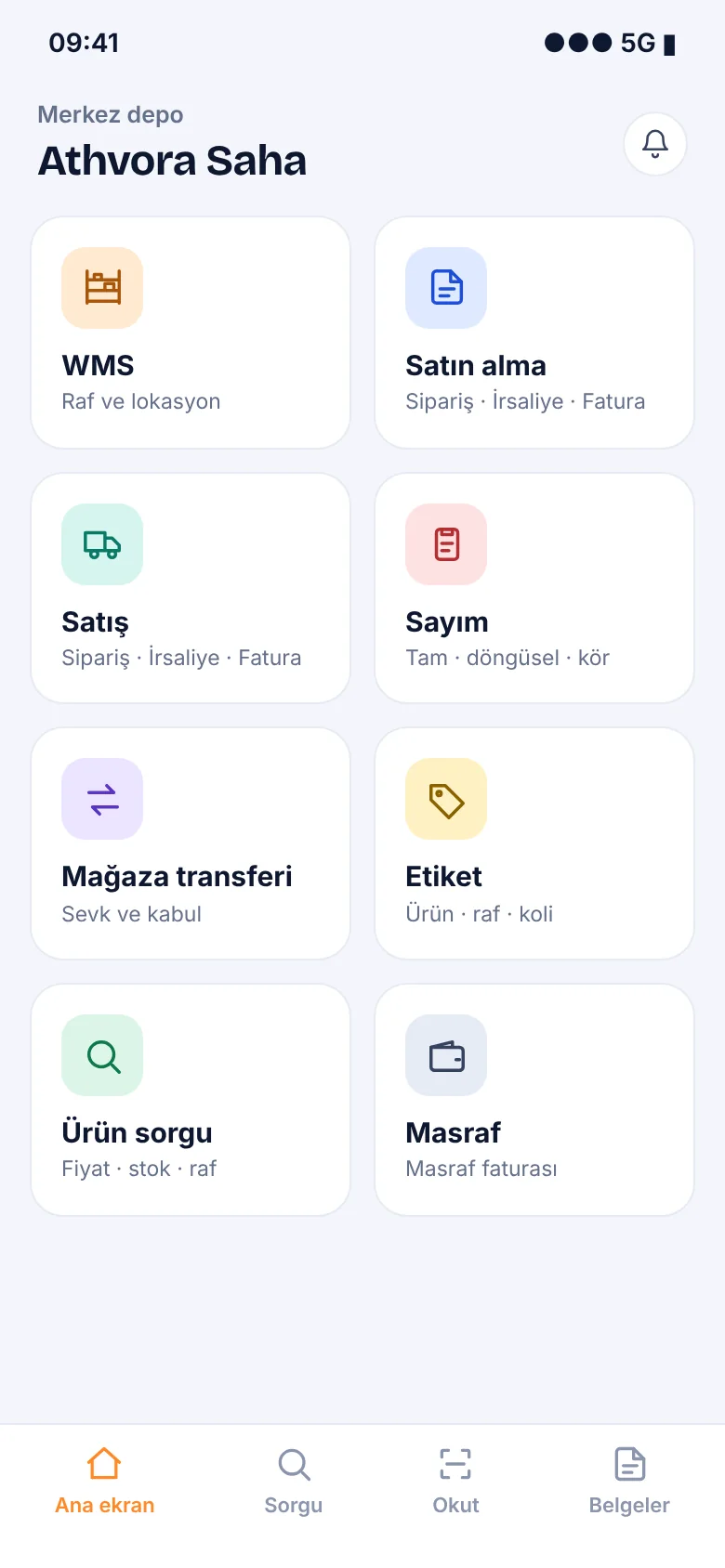
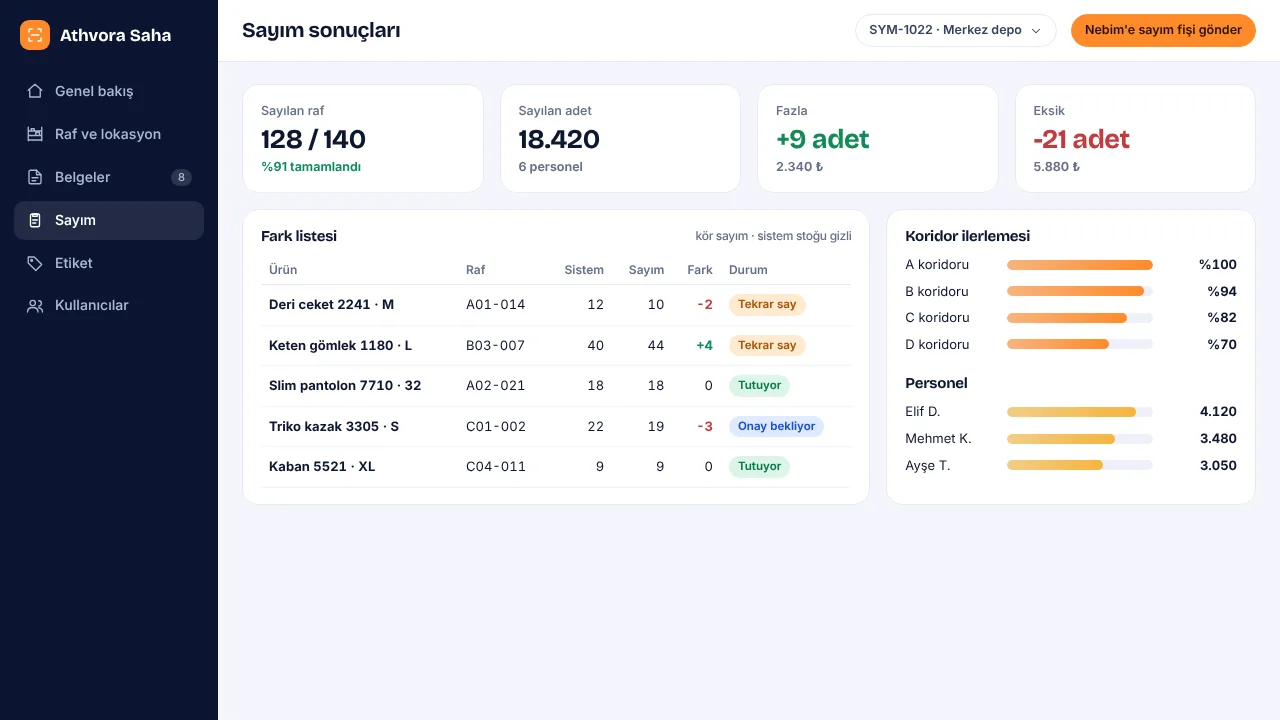
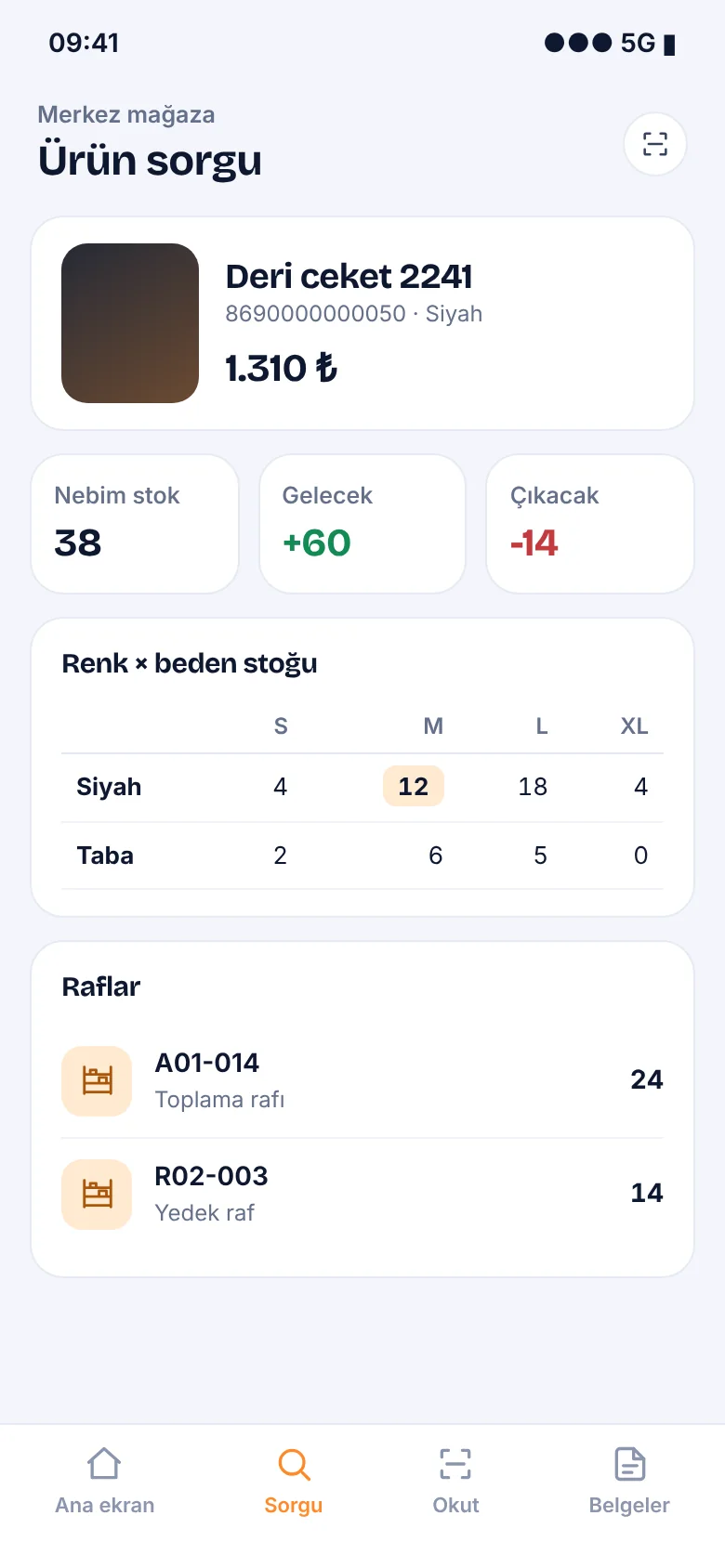
Screens are prepared with sample (demo) data and contain no real company data.
 Athvora Club
Club management from student registration to training attendance, from dues to the cash report. No ERP needed; each club runs on its own address with its own logo. The app is in Turkish.
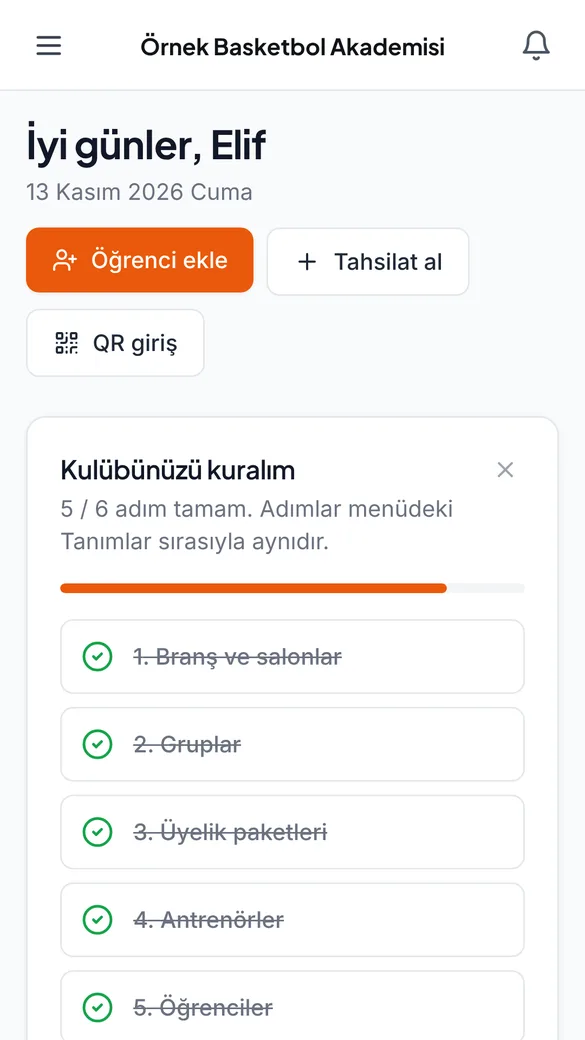
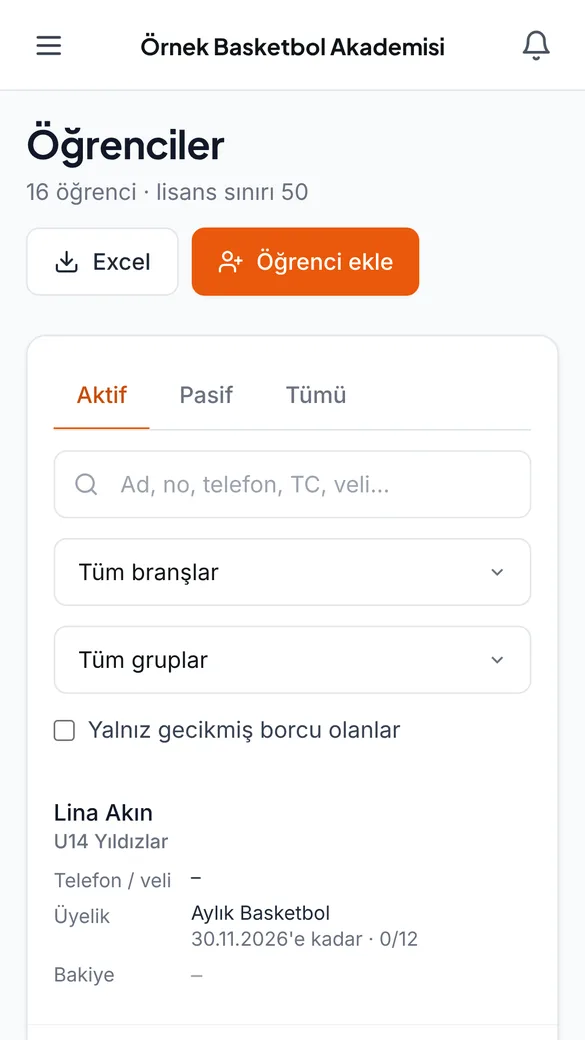
Screens are prepared with sample data.

A dues app for residential sites and apartment buildings: units and residents, dues accrual, collections and debt tracking. Managers use the web panel, residents use their phones.
Short notes on technical topics encountered while building the applications.
When you send a document to another system, the most dangerous moment is when the request has gone out and no answer comes back. Was the document created on the other side or not? You cannot know. Retrying automatically at that point means a duplicate invoice or a duplicate order.
So every document in the write queue has an explicit state: queued, sending, sent, error, unknown. No request is made before "sending" is committed to the database; if no answer arrives the document becomes "unknown" and is never retried on its own. The user looks it up in the other system, enters its number if it exists, or resends it deliberately if it does not.
It takes a little more human effort; in return, no unexplained duplicates show up in accounting.
If several companies use the same app, the biggest risk is one company seeing another's data. Leaving that to application code alone means trusting that nobody ever forgets a single "WHERE" clause.
In Athvora apps every table carries the tenant id and the database enforces row-level security: a query sees only the rows of the tenant it runs for. Even if the application forgets the condition, the database refuses. Tests create two sample tenants and check separately that one cannot reach the other's data.
A camera reads dozens of frames a second; a user holding a barcode in view counts the same item five times without noticing. The fix is two rules: the same code is not counted again for a short while after it is read, and there is a small pause between any two reads.
The second surprise was sound. Browsers do not allow audio before the user touches the screen, and on iPhone audio is also paused when the camera opens. For the scan beep to play reliably, audio is prepared on the first touch in the app and woken up again on every read.
You can send questions about the applications, the techniques used or the development notes; every message is read and answered.
This site is a project showcase; it contains no sales, pricing or offers.